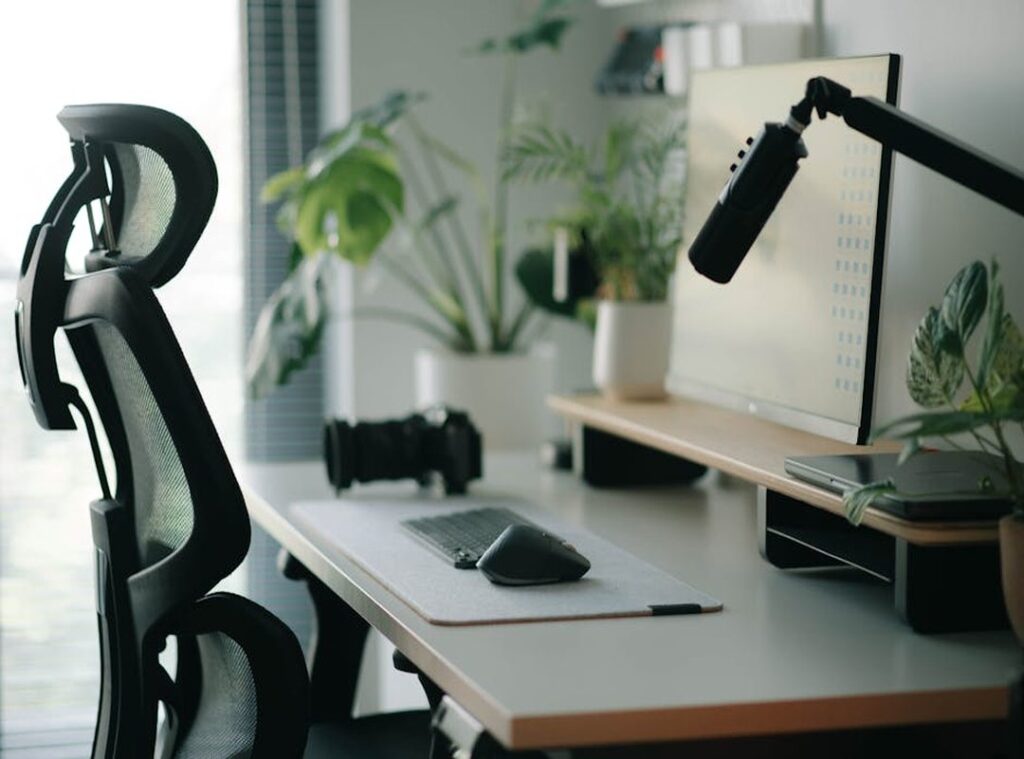
Back pain, neck stiffness, and energy drain. These are the unwelcome guests we’ve let in by making home our new office. It’s not just about your chair or desk.
Your entire home setup could be the culprit.
Ever wondered why your productivity tanks by midday? Or why you feel trapped in a cycle of discomfort? Your body and your home aren’t in sync.
But they can be.
Forget expensive gadgets. This article is packed with ergonomic tips home enthusiasts need. Grounded in science and wellness, it’s about optimizing your space, not emptying your wallet.
You want more energy, less pain, and a setup that works with you, not against you. We get it. That’s why we’ve consulted experts in functional movement.
After reading, you’ll have a personalized plan to transform your home into a high-energy, pain-free zone.
The Science of a Slump: Why Your Home Setup is Causing Aches
Ergonomics isn’t just a buzzword. It’s the science of shaping your world to fit you, not the other way around. Sounds simple, right?
But how often do we ignore it?
Ever heard of “Repetitive Strain” or “Static Loading”? These concepts creep into our homes more than we realize. Holding a poor posture for hours is like a workout for the wrong muscles.
You know that slouchy position you adopt while binging Netflix? It’s not doing you any favors.
Here’s the skinny on the kinetic chain: your head juts forward (hello, “tech neck”) and suddenly your shoulders and back are protesting. It’s not just about pain, though. Poor ergonomics restrict blood flow and oxygen, sapping your energy and clouding your mind.
Want mental clarity and energy? Fix your setup.
Think of your posture as the foundation of a house. If it’s crooked, everything above it feels the strain. Start small.
Tweak your workspace. And for more simple morning habits healthier lifestyle, check out these tips.
Your home should be a haven, not a headache. Are you ready to change it up?
Quick Fix Ergonomics: Spot Your Pain Points Fast
You spend hours at your desk, but is it set up right? Start with your feet. Are they comfortably flat on the floor or resting on something stable?
If they’re swinging in the air, you’re asking for trouble.
Knees should bend at a 90-degree angle. Are they? Lower back needs support, ideally from your chair’s lumbar curve.
If you’re slouching, grab a cushion. Feel those shoulders. They should be relaxed.
Are your elbows close, forming neat right angles? Typing with bent wrists? That’s a no-go.
Keep them straight to avoid strain.
Look at your monitor. Is it at eye level? Or do you crane your neck downward every time you read an email?
Your setup might need some tweaking.
Now, let’s move beyond the desk. What about when you’re lounging with your laptop on the couch or scrolling through your phone at the counter? Odds are, your posture needs attention here too.
Slouching or bending over? That’s a recipe for back pain.
Consider this: each time you catch yourself in a slumped position, make a conscious effort to correct it. It might seem small, but these changes add up. For a deeper dive, check out this ergonomic tip for working at home.
It can transform your workspace with practical takeaways.
Remember, improving your ergonomics isn’t just about comfort. It’s key for long-term health, reducing strain, and boosting productivity. These ergonomic tips home can be your game-changer.
Don’t ignore this simple audit. It’s a five-minute investment in a better you.
Engineer Your Workspace: Foundations for Success
Your workspace is your cockpit. Get it right, and you’re in control. Get it wrong, and you’re fighting against yourself.

Sounds dramatic? It is. to some ergonomic tips home enthusiasts should know.
First up, the 90-90-90 rule. This is the golden standard for sitting. Imagine your ankles, knees, and hips all at 90-degree angles.
It’s not just about comfort. It’s about keeping your body aligned. Trust me, a simple diagram would make this concept crystal clear.
Now take a second and check your monitor. Is it at eye level? If not, you’re craning your neck all day.
Bad news for anyone. Keep your screen at arm’s length. DIY solutions?
A stack of books or a sturdy box can raise that monitor up. For laptops, use an external keyboard and mouse. These aren’t just nice to have.
They’re important for long work sessions.
Your spine’s natural ‘S’ curve needs love, too. Supporting it helps you avoid that dreaded slouch. A dedicated lumbar pillow is great, but a rolled-up towel works in a pinch.
Either way, your back will thank you.
Don’t forget about your wrists and arms. Keep that keyboard and mouse close. This isn’t nitpicking.
Want to take your personal health journey further? Consider how you might achieve better sleep without medication. Small changes can make big differences.
It actually relaxes your shoulders and prevents neck strain. Simple adjustments, massive improvements.
Pro tip? Take breaks. A quick stretch or walk can reset your body and brain.
It’s easy to overlook, but your performance depends on it. Seriously, move around. It’s not just about setting up your desk.
It’s about setting yourself up for success.
So, will you make the change? Your future self will thank you.
Ergonomics in Motion: Keep Moving for Wellness
Let’s talk about movement. Sitting all day? It’s a disaster for your body.
I know, you probably think what’s the big deal? But trust me, shifting from static positions to changing movement is a game-changer. Enter the concept of Movement Snacks.
These are little bursts of activity throughout your day, like a snack for your muscles. They aren’t chores, they’re tools to reset your mind and body.
Set a timer for every 30-50 minutes. When it goes off, move. It’s that simple.
Not sure where to start? Try a Seated Cat-Cow. Sit on the edge of your chair, arch your back as you inhale, then round it as you exhale.
Or how about Chin Tucks for that pesky “tech neck”? Just tuck your chin down, hold for a few seconds, and release. Torso Twists are another winner.
Sit upright, twist your torso to one side, hold, then switch.
Now, let’s move to the kitchen. Standing for long periods can be brutal on your back. Here’s a pro tip: place one foot on a low stool while cooking or washing dishes.
It relieves pressure on the lower back.
And what about the couch? Your couch can be a support zone, not a slouch zone. Use pillows to support your lower back and neck when you’re lounging.
It’s all about making small tweaks for big benefits.
So why wait? These ergonomic tips for home are easy to integrate. Make movement a habit, and you’ll thank yourself later.
Build Your Healthier Space Now
Aches and fatigue aren’t mysteries. They’re the silent screams of your home working against you. You’ve just armed yourself with a toolkit of foundational adjustments.
It’s not just about dodging pain; it’s about reclaiming energy, focus, and well-being. You’ve done the ergonomic audit. Now what?
Don’t overwhelm yourself. Choose one thing (like) adjusting your monitor height or adding a towel for back support (and) do it today. It’s practical.
This is your moment. Start small but start now. Your environment should be your ally, not your enemy.
These ergonomic tips home aren’t just ideas; they’re the beginning of your journey to a more energized life. Need proof? You’ve got the power, the tools, and the knowledge.
Take that first step. Set up one change. Feel the difference.
 Ask Joseph Stronginers how they got into foundational fitness routines and you'll probably get a longer answer than you expected. The short version: Joseph started doing it, got genuinely hooked, and at some point realized they had accumulated enough hard-won knowledge that it would be a waste not to share it. So they started writing.
What makes Joseph worth reading is that they skips the obvious stuff. Nobody needs another surface-level take on Foundational Fitness Routines, Healthy Living Hacks, Functional Training Protocols. What readers actually want is the nuance — the part that only becomes clear after you've made a few mistakes and figured out why. That's the territory Joseph operates in. The writing is direct, occasionally blunt, and always built around what's actually true rather than what sounds good in an article. They has little patience for filler, which means they's pieces tend to be denser with real information than the average post on the same subject.
Joseph doesn't write to impress anyone. They writes because they has things to say that they genuinely thinks people should hear. That motivation — basic as it sounds — produces something noticeably different from content written for clicks or word count. Readers pick up on it. The comments on Joseph's work tend to reflect that.
Ask Joseph Stronginers how they got into foundational fitness routines and you'll probably get a longer answer than you expected. The short version: Joseph started doing it, got genuinely hooked, and at some point realized they had accumulated enough hard-won knowledge that it would be a waste not to share it. So they started writing.
What makes Joseph worth reading is that they skips the obvious stuff. Nobody needs another surface-level take on Foundational Fitness Routines, Healthy Living Hacks, Functional Training Protocols. What readers actually want is the nuance — the part that only becomes clear after you've made a few mistakes and figured out why. That's the territory Joseph operates in. The writing is direct, occasionally blunt, and always built around what's actually true rather than what sounds good in an article. They has little patience for filler, which means they's pieces tend to be denser with real information than the average post on the same subject.
Joseph doesn't write to impress anyone. They writes because they has things to say that they genuinely thinks people should hear. That motivation — basic as it sounds — produces something noticeably different from content written for clicks or word count. Readers pick up on it. The comments on Joseph's work tend to reflect that.