
We obsess over protein, carbs, and fats—but true vitality comes from the microscopic compounds quietly powering every cell in your body. If you feel tired, foggy, or just “off” despite eating a balanced diet, the issue may be a hidden micronutrient gap. Understanding micronutrient importance can be the difference between simply getting by and truly thriving. Backed by years of hands-on functional nutrition and fitness coaching experience, this guide breaks down what micronutrients are, why they matter more than you think, and the simple, practical strategies you can use to ensure your body gets exactly what it needs.
Vitamins and minerals are your body’s unsung heroes. Think of macronutrients as the fuel for your car, and micronutrients as the spark plugs, engine oil, and coolant—small but essential for everything to work. My trainer once told me, “You can’t run a Ferrari on fumes and expect the dashboard lights to fix themselves.” That stuck with me.
Vitamins are organic compounds made by plants or animals, while minerals are inorganic elements pulled from soil and water. In plain English, one group is living chemistry; the other is earth-born building blocks. The difference matters. Water-soluble vitamins like B and C dissolve in water, get used quickly, and excess amounts are flushed out daily. So you need steady intake. Fat-soluble vitamins—A, D, E, and K—are stored in body fat and the liver. “That’s why megadosing scares me,” a dietitian said during a workshop. “Storage can turn helpful into harmful.”
Minerals follow a similar split. Major minerals—calcium, magnesium, potassium—are required in larger amounts than trace minerals like iron and zinc, yet both categories are vital to micronutrient importance. Major doesn’t mean more important. It simply reflects quantity. Think blockbuster cast versus cameo: both make the movie work. Neglect either, and the plot unravels.
From Energy Production to Immune Defense: Why Micros Matter
A few years ago, I hit a wall. My workouts felt harder, my focus slipped by mid-afternoon, and no amount of coffee fixed it. As it turns out, it wasn’t my training plan—it was my micronutrients.
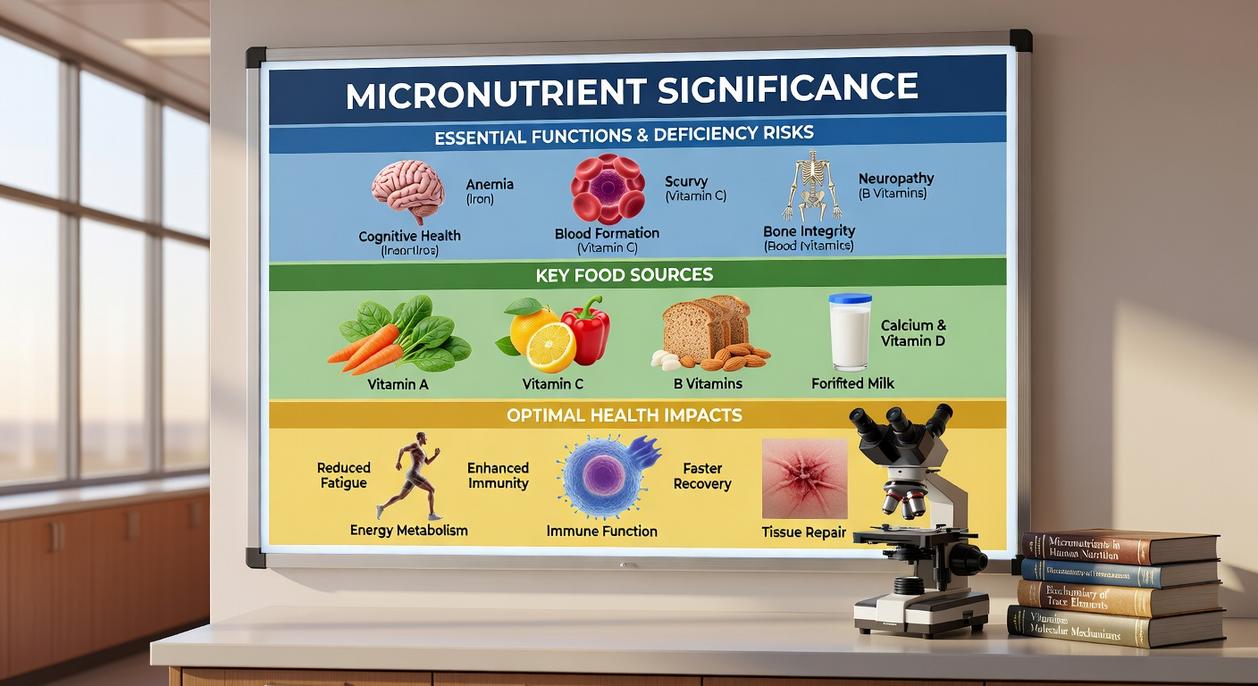
First, let’s define the basics. Micronutrients are vitamins and minerals your body needs in small amounts to function properly (but “small” doesn’t mean optional). Their role in energy, immunity, and recovery highlights true micronutrient importance.
Fueling Your Metabolism
The B-vitamin complex—B1 (thiamine), B2 (riboflavin), B3 (niacin), and B12 (cobalamin)—helps convert carbs, fats, and protein into ATP, your cells’ usable energy. Without enough B12, for example, red blood cell production drops, leading to fatigue (NIH). No wonder my lifts felt heavier than usual.
Building a Resilient Immune System
Then there’s the immune triad: Vitamin C, Vitamin D, and Zinc. Vitamin C supports white blood cell function, Vitamin D regulates immune response, and Zinc aids cell signaling (Harvard T.H. Chan School of Public Health). Together, they work synergistically—like the Avengers, but for your immune cells.
Strengthening Your Foundation
For bones and muscle contraction, Calcium, Vitamin D, and Magnesium are non-negotiable.
| Nutrient | Primary Role | Fitness Impact |
|---|---|---|
| Calcium | Bone strength |
Injury prevention |
| Vitamin D | Calcium absorption | Muscle efficiency |
| Magnesium | Muscle relaxation | Fewer cramps |
Enhancing Brain Function and Mood
Finally, Iron, Magnesium, and Zinc influence neurotransmitters like dopamine and serotonin. Low iron? Hello, brain fog. (Been there.)
If you’re unsure where to start, review your diet patterns or explore evidence-based guidance like this overview from the NIH Office of Dietary Supplements. Sometimes, better performance starts with what’s missing—not what’s added.
Listening to Your Body: Common Signs of a Micronutrient Gap
Disclaimer: This is for informational purposes, not medical diagnosis. Always consult a healthcare professional.
Your body whispers before it screams. Persistent fatigue, brittle nails, or brain fog aren’t just “busy life” symptoms—they can signal gaps in essential vitamins and minerals.
Fatigue: Burnout or Iron Deficiency?
A) You’re overworked and underslept.
B) You’re low in Iron or Vitamin B12.
Both feel similar. However, if rest doesn’t fix the exhaustion, low iron (a mineral that helps carry oxygen in your blood) or B12 may be involved. According to the NIH, iron deficiency is one of the most common nutritional deficiencies worldwide.
- Brittle hair and nails: Often linked to low Biotin (Vitamin B7) or Iron.
- Frequent colds: Could point to inadequate Vitamin C, Vitamin D, or Zinc (key immune-support nutrients).
- Muscle cramps: Frequently tied to low Magnesium, Potassium, or Calcium.
- Brain fog: Sometimes associated with insufficient B vitamins or Iron.
Some argue these symptoms are too general to mean anything. Fair point. Yet recurring patterns—especially multiple symptoms together—highlight micronutrient importance in daily health.
Instead of guessing, compare quick fixes (energy drinks, supplements) versus foundational habits. Often, improving diet quality wins long term. Start with this guide on how to build a balanced meal plan for sustainable energy.
(Pro tip: Track symptoms for two weeks before making changes.)
Eat the Rainbow for Better Health
If you want a simple upgrade to your diet, start by eating more color. The “eat the rainbow” principle means choosing fruits and vegetables across the color spectrum because each hue signals different nutrients. For example, red foods like tomatoes contain lycopene, while dark leafy greens deliver iron and folate. In other words, color equals coverage.
Just as importantly, micronutrient importance in the section reminds us that vitamins and minerals power everything from immunity to energy production.
Here are easy swaps to try this week:
- Swap iceberg lettuce for spinach
- Swap white bread for whole grain
- Swap sugary yogurt for plain Greek yogurt with berries
- Swap chips for nuts or seeds
Additionally, prioritize whole foods. Processing often strips nutrients, so choose foods close to their natural state. Focus on all-stars like leafy greens, berries, bell peppers, nuts, seeds, and fatty fish for maximum impact.
Small Changes, Powerful Results
You came here to understand why your energy still feels off despite counting calories—and now you see the truth. Real wellness depends on micronutrient importance, not just portion control. That lingering fatigue and lack of vitality often trace back to simple nutrient gaps your body quietly struggles with every day.
The good news? The fix isn’t extreme. A colorful, diverse plate filled with whole foods is the most sustainable way to fuel your body for life.
Here’s your move: add one new colorful fruit or vegetable to your meals each day this week. Small changes build powerful, lasting health.
 Ask Kenneth Weldoneverico how they got into wellness buzz and you'll probably get a longer answer than you expected. The short version: Kenneth started doing it, got genuinely hooked, and at some point realized they had accumulated enough hard-won knowledge that it would be a waste not to share it. So they started writing.
What makes Kenneth worth reading is that they skips the obvious stuff. Nobody needs another surface-level take on Wellness Buzz, In-Depth Wisdom, Healthy Living Hacks. What readers actually want is the nuance — the part that only becomes clear after you've made a few mistakes and figured out why. That's the territory Kenneth operates in. The writing is direct, occasionally blunt, and always built around what's actually true rather than what sounds good in an article. They has little patience for filler, which means they's pieces tend to be denser with real information than the average post on the same subject.
Kenneth doesn't write to impress anyone. They writes because they has things to say that they genuinely thinks people should hear. That motivation — basic as it sounds — produces something noticeably different from content written for clicks or word count. Readers pick up on it. The comments on Kenneth's work tend to reflect that.
Ask Kenneth Weldoneverico how they got into wellness buzz and you'll probably get a longer answer than you expected. The short version: Kenneth started doing it, got genuinely hooked, and at some point realized they had accumulated enough hard-won knowledge that it would be a waste not to share it. So they started writing.
What makes Kenneth worth reading is that they skips the obvious stuff. Nobody needs another surface-level take on Wellness Buzz, In-Depth Wisdom, Healthy Living Hacks. What readers actually want is the nuance — the part that only becomes clear after you've made a few mistakes and figured out why. That's the territory Kenneth operates in. The writing is direct, occasionally blunt, and always built around what's actually true rather than what sounds good in an article. They has little patience for filler, which means they's pieces tend to be denser with real information than the average post on the same subject.
Kenneth doesn't write to impress anyone. They writes because they has things to say that they genuinely thinks people should hear. That motivation — basic as it sounds — produces something noticeably different from content written for clicks or word count. Readers pick up on it. The comments on Kenneth's work tend to reflect that.