Most workouts make you better at exercising—but not necessarily better at living. If you’ve ever struggled to carry heavy groceries, lift a suitcase into an overhead bin, or play with your kids without feeling sore, you’ve felt the gap between gym strength and real-world strength. This is where functional training benefits stand out. By focusing on movements that mirror daily life—pushing, pulling, squatting, rotating—you build strength that actually transfers outside the gym. Backed by proven training principles and practical application, this article breaks down how functional fitness improves mobility, prevents injury, and enhances everyday performance in ways traditional workouts often miss.
Defining the Movement: What is Functional Fitness?
Incorporating functional training into your routine not only enhances your overall strength for daily tasks but also complements smart diets, making tips from our article ‘Diet Hacks Twspoondietary‘ essential for maximizing your fitness journey.
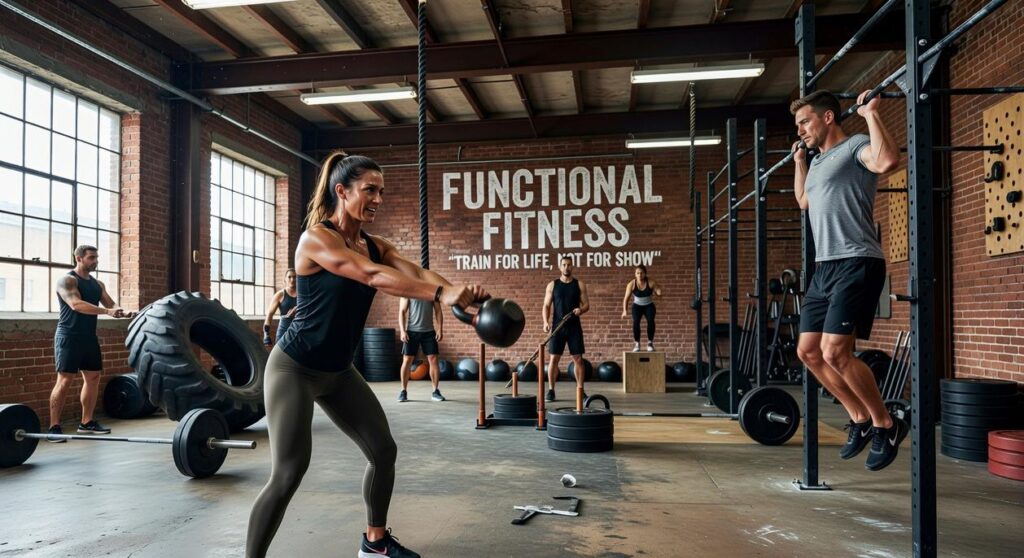
Have you ever wondered why some workouts make daily life feel easier—like lifting groceries or climbing stairs—while others just make your arms sore? Functional fitness focuses on training movements, not just muscles. In simple terms, it means performing exercises that mimic real-world actions so your muscles work together synergistically (the way they’re designed to).
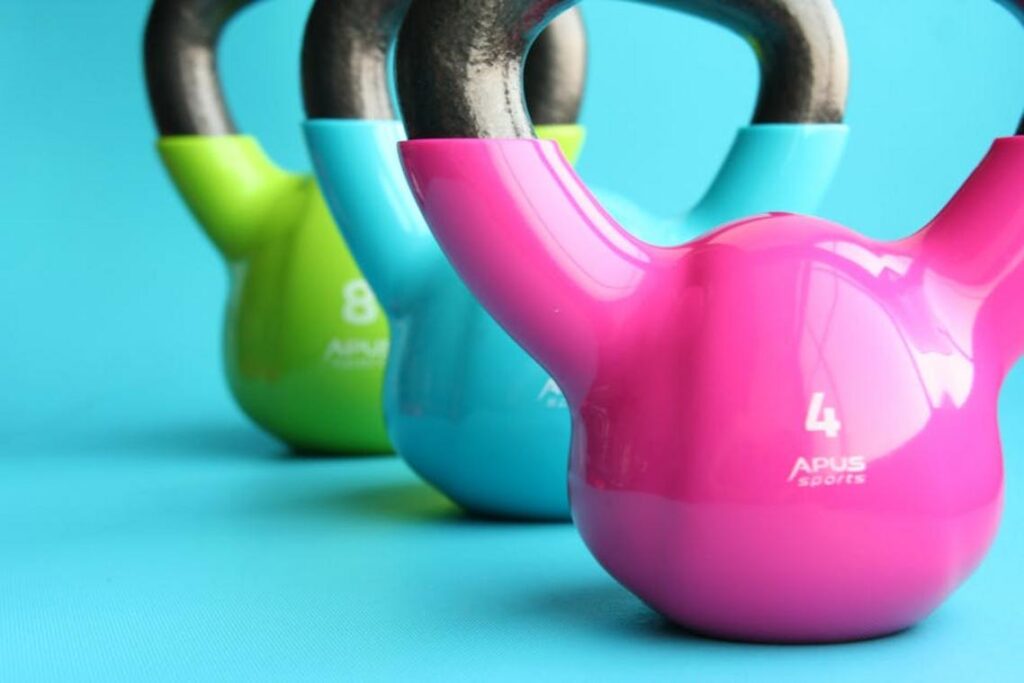
Think about a kettlebell swing versus a bicep curl. A curl isolates one muscle group. A swing trains your hips, core, shoulders, and coordination all at once. Which one sounds more like real life?
At its core, functional training is built on foundational human patterns:
- Push
- Pull
- Squat
- Hinge
- Lunge
- Carry
These movements show up everywhere—picking up a box, pushing a door, or sprinting to catch a bus. The real functional training benefits? Strength that actually transfers outside the gym. Sound like something your current routine delivers?
Build a More Resilient Body for Everyday Life
I used to think lifting heavier automatically meant getting stronger. More plates, more progress. Unfortunately, that mindset led to a strained lower back that sidelined me for weeks. What I learned the hard way is that strength without stability is like building a house on sand.
Benefit 1: Drastically Reduced Risk of Injury
At first, I ignored the small stabilizer muscles—the deep core, hips, and shoulders. Big mistake. Functional training strengthens these often-overlooked muscles around major joints, creating a natural defense against sprains, strains, and nagging back pain. In other words, it builds strength you can actually use. Once I focused on controlled, multi-joint movements, everyday tasks—carrying groceries, lifting boxes—felt easier and safer.
Benefit 2: Enhanced Mobility and Flexibility
Meanwhile, sitting for hours left me stiff and tight. Traditional workouts didn’t fix that. Functional exercises move your body through a full range of motion, improving joint health and reducing stiffness caused by sedentary habits. As a result, squats felt smoother, shoulders moved freely, and I stopped feeling like the Tin Man before coffee.
Benefit 3: Improved Posture and Balance
Perhaps the biggest lesson? Balance matters. Unilateral (single-arm or single-leg) exercises forced me to confront imbalances I didn’t know I had. They engage postural muscles and correct the slouching patterns that come from desk life. Over time, my posture improved—and so did my confidence.
Here’s what I wish I’d known earlier about functional training benefits:
- Train stability before intensity
- Move through full ranges of motion
- Prioritize balance as much as strength
Because resilience isn’t about lifting the most. It’s about moving well for life.
From Daily Chores to Athletic Performance: The Practical Gains

I remember helping my neighbor move a solid oak dresser up two flights of stairs. Halfway up, he muttered, “I should’ve stretched.” I smiled—because this wasn’t about stretching. It was about strength you actually use.
Benefit 4: Making Daily Activities Effortless
Functional exercises mirror real life (which is kind of the point).
- Squats train the same pattern you use to stand up from a chair or get off the floor.
- Deadlifts teach you to hinge at the hips so you can lift heavy boxes without wrecking your back (spine neutral, ego optional).
- Farmer’s walks build grip and core strength for hauling groceries, luggage, or that “one-trip-only” Costco run.
These movements reinforce proper biomechanics—how your body moves safely and efficiently under load (McGill, 2016). When done consistently, daily chores stop feeling like mini workouts.
Pro tip: If you struggle getting off low couches, practice controlled bodyweight squats three times a week.
Benefit 5: Increased Muscle Strength and Endurance
Some argue functional workouts are “light” or less intense than bodybuilding splits. Not true. Compound movements—exercises using multiple joints and muscle groups at once—demand more energy and coordination (ACSM, 2022). That means higher muscle activation and cardiovascular demand.
Functional does not mean easy. It means integrated. And the functional training benefits show up as real-world stamina, not just mirror muscles.
Benefit 6: Boosted Athletic Crossover
The power from kettlebell swings, the stability from single-leg work, and the coordination from loaded carries directly improve:
- Running efficiency
- Golf swing control
- Tennis rotational power
- Team sport agility
I noticed my sprint speed improved after focusing on kettlebell workouts for power balance and coordination. Not because I trained sprints more—but because I trained smarter.
Turns out, life and sport reward strength you can actually use.
Simple Ways to Integrate Functional Training Today
I used to think workouts had to be complicated to work. I piled on machines, fancy splits, and left exhausted—but not stronger. The lesson? Master the basics first.
Start with bodyweight moves: air squats, lunges, planks, and push-ups. Focus on form and steady breathing. When I rushed reps, my knees paid for it (and my ego did too).
Next, add simple tools:
- Kettlebells for swings and carries
- Resistance bands for rows and pull-aparts
- Medicine balls for rotational throws
I once skipped carries because they looked “too easy.” They build grip, core stability, and real-world strength—the kind you use.
Try this starter circuit:
- 10 Goblet Squats
- 30-second Farmer’s Walk
- 8 Dumbbell Rows
Repeat three times. You’ll feel the functional training benefits without overwhelming your schedule. Pro tip: stop two reps before failure to keep form sharp and progress.
Make Your Fitness Serve Your Life
You started this guide to understand how to make your workouts actually matter in daily life. Now you can see that real fitness isn’t about isolated strength — it’s about building a body that performs when life demands it.
If you’re tired of training hard but still feeling unprepared for real-world physical challenges, it’s time to shift your approach. functional training benefits go beyond aesthetics, improving coordination, stability, resilience, and total-body strength that carries over into everything you do.
Here’s your next step: swap one isolation move in your next workout for a functional movement. Feel the difference immediately — and start building a body that truly works for you.
 Ask Kenneth Weldoneverico how they got into wellness buzz and you'll probably get a longer answer than you expected. The short version: Kenneth started doing it, got genuinely hooked, and at some point realized they had accumulated enough hard-won knowledge that it would be a waste not to share it. So they started writing.
What makes Kenneth worth reading is that they skips the obvious stuff. Nobody needs another surface-level take on Wellness Buzz, In-Depth Wisdom, Healthy Living Hacks. What readers actually want is the nuance — the part that only becomes clear after you've made a few mistakes and figured out why. That's the territory Kenneth operates in. The writing is direct, occasionally blunt, and always built around what's actually true rather than what sounds good in an article. They has little patience for filler, which means they's pieces tend to be denser with real information than the average post on the same subject.
Kenneth doesn't write to impress anyone. They writes because they has things to say that they genuinely thinks people should hear. That motivation — basic as it sounds — produces something noticeably different from content written for clicks or word count. Readers pick up on it. The comments on Kenneth's work tend to reflect that.
Ask Kenneth Weldoneverico how they got into wellness buzz and you'll probably get a longer answer than you expected. The short version: Kenneth started doing it, got genuinely hooked, and at some point realized they had accumulated enough hard-won knowledge that it would be a waste not to share it. So they started writing.
What makes Kenneth worth reading is that they skips the obvious stuff. Nobody needs another surface-level take on Wellness Buzz, In-Depth Wisdom, Healthy Living Hacks. What readers actually want is the nuance — the part that only becomes clear after you've made a few mistakes and figured out why. That's the territory Kenneth operates in. The writing is direct, occasionally blunt, and always built around what's actually true rather than what sounds good in an article. They has little patience for filler, which means they's pieces tend to be denser with real information than the average post on the same subject.
Kenneth doesn't write to impress anyone. They writes because they has things to say that they genuinely thinks people should hear. That motivation — basic as it sounds — produces something noticeably different from content written for clicks or word count. Readers pick up on it. The comments on Kenneth's work tend to reflect that.