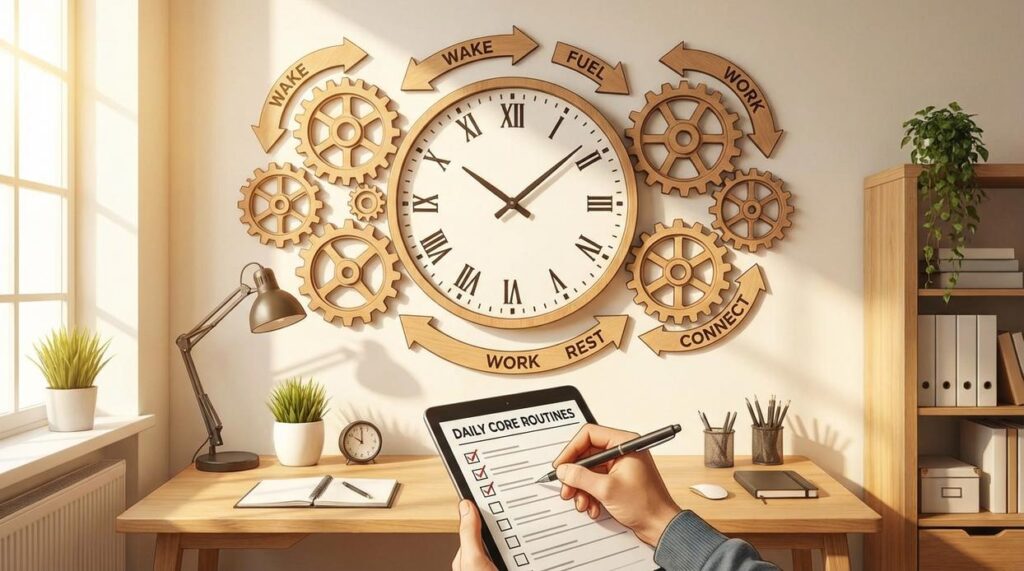

Getting healthy shouldn’t feel overwhelming, confusing, or reserved for people with unlimited time. If you’re here, you’re likely looking for practical, realistic ways to improve your fitness, nutrition, and daily habits without turning your life upside down. This article is designed to do exactly that.
We break down foundational fitness routines, smart daily nutrition strategies, and functional training principles you can actually sustain. You’ll also learn how small shifts—like using habit stacking techniques to anchor new behaviors to existing routines—can create long-term results without burnout.
Our approach is grounded in evidence-based wellness principles, current exercise science, and proven behavior-change frameworks used by health professionals. Instead of trends that fade in a month, you’ll find actionable guidance that builds strength, energy, and consistency over time.
If your goal is to feel better, move better, and live healthier—starting now—this guide gives you a clear, manageable path forward.
The A vs. B Habit Battle
Most people try A: rely on MOTIVATION. They say, “I’ll work out after work.” By 6 p.m., willpower is gone (hello, couch).
B is smarter: use habit stacking techniques—attach a 5-minute workout to your morning coffee.
Here’s the difference:
- A depends on mood.
- B depends on routine.
- A feels hard. B feels automatic.
Willpower is finite (Baumeister et al., 1998). Routines conserve energy. When coffee brews, you move. No debate.
Think Batman with prep time—systems beat strength.
Pro tip: Start SMALL. Consistency compounds. Pair brushing teeth with squats. Effortless beats intense every time.
Why Habit Pairing Works: The Science of Automaticity
Incorporating simple habit stacking techniques into your daily routine can make all the difference for your long-term health, especially when paired with the benefits of Core Stability Workouts for Total-Body Support.
Your brain runs on neural pathways—bundles of connected neurons that fire together and, over time, wire together (yes, your skull has its own road construction crew). Think of existing habits as six-lane highways. Brushing your teeth? Highway. Morning coffee? Highway. Scrolling your phone before bed? Unfortunately, also a highway.
Habit pairing works because you piggyback on those highways. Instead of building a dirt road from scratch, you attach a new behavior to an established route. The brain loves efficiency. When one action automatically triggers another, you bypass the exhausting “Should I do this now?” debate. That’s automaticity—behavior happening with minimal conscious effort.
Here’s the framework: the anchor is your current routine. The action is the new habit you want to build. Brush teeth (anchor), then do 10 pushups (action). Pour coffee (anchor), then drink a glass of water (action). Simple. Slightly sneaky. Highly effective.
The real magic? Lowering the barrier. Starting is the hardest part—motivation is flaky (like a croissant with commitment issues). Make the action tiny and laughably easy. Use habit stacking techniques to lock it in. Momentum follows consistency, not heroics. Pro tip: scale up only after it feels automatic.
Your 3-Step Guide to Effective Habit Pairing

Building better habits doesn’t require a personality transplant. It requires strategy (and maybe slightly less scrolling at midnight). Here’s the simple, science-backed approach that actually sticks.
Step 1: Identify Your “Anchor” Habits
Anchor habits are routines you already do without thinking—like brushing your teeth, brewing coffee, commuting, or changing into pajamas. These are non-negotiable daily actions. Consistency is key. If your anchor habit only happens “sometimes,” it’s more of a wish than a routine. Choose something rock-solid. (Yes, even your dramatic sigh before your first sip of coffee counts.)
Step 2: Choose a “Micro” Habit
A micro habit is a behavior so small it feels almost laughable. That’s the point. Research from Stanford behavior scientist B.J. Fogg shows tiny habits are more likely to stick because they reduce resistance (Fogg, Tiny Habits, 2020).
Think: one glass of water, two minutes of stretching, writing one sentence in a journal. Not a novel. One sentence. Starting small builds momentum—and momentum beats motivation every time.
Pro tip: If it feels too easy, you’re doing it right.
Step 3: Craft Your Pairing Statement
This is where the magic happens. Use this formula exactly:
After I [CURRENT HABIT]
I will [NEW HABIT].
Examples:
- After I turn on the coffee pot, I will do 15 bodyweight squats.
- After I take off my work shoes, I will immediately change into my gym clothes.
That’s habit stacking in action—linking a new behavior to an existing one so your brain treats them like roommates instead of strangers. Keep it simple, keep it consistent, and let the small wins snowball.
Real-World Pairing Examples for a Healthier Life
Healthy change doesn’t have to mean a total life overhaul. In fact, pairing small actions with routines you already do—a concept known as habit stacking techniques (linking a new behavior to an existing one)—can quietly transform your day.
Foundational Fitness Routines
For example:
- “After I finish my lunch I will go for a 10-minute walk.”
- “While my dinner is in the oven I will hold a 60-second plank.”
These micro-commitments build consistency (doing something regularly enough that it becomes automatic). Some critics argue that 10-minute walks or 60-second planks are too small to matter. However, research consistently shows that short bouts of movement improve cardiovascular health and reduce sedentary risk (CDC). Small reps compound—kind of like interest in a savings account.
Daily Nutrition Strategies
Similarly, nutrition improves when paired with existing cues:
- “After I pour my morning coffee I will take my daily vitamins.”
- “Before I eat my dinner I will drink a full glass of water.”
- “When I pack my lunch for work I will also pack one healthy snack like an apple.”
Hydration before meals may support appetite regulation (Mayo Clinic). While skeptics say timing doesn’t matter, behavioral research suggests cues dramatically increase follow-through.
Functional Wellness Hacks
Meanwhile, recovery habits matter just as much:
- “After I shut my laptop for the day, I will meditate for three minutes.”
- “When my alarm goes off, I will immediately stretch for 90 seconds before getting out of bed.”
Pro tip: Keep stretches simple so there’s zero friction.
Looking ahead, it’s reasonable to speculate that wearable tech will automate these pairings—nudging you in real time. And as interest in sleep grows, more people may explore sleep optimization tips backed by research to stack nighttime routines more effectively.
When your anchor habit fails, everything wobbles. If it is not daily, it is not dependable. Choose a rock-solid trigger like brushing your teeth. I prefer morning coffee because it NEVER disappears.
Forgetting the new habit? Use visual cues. Put workout clothes on your bed; you cannot ignore them.
No motivation? GOOD. I believe action beats feelings every time. Consistency creates momentum, not hype. Think habit stacking techniques: attach one tiny action after coffee.
Table below keeps it simple.
| Problem | Fix |
| Anchor slips | Upgrade trigger |
| Forget | Add cue |
| No drive | Act anyway |
Your Action Plan for Effortless Habit Formation
You now have a proven, science-backed method to build lasting habits by integrating them into your existing routines.
Still, I’ll admit something: behavior change research is evolving, and no approach works for absolutely everyone.
That said, habit pairing—linking a new micro habit (a tiny, two-minute action) to an anchor habit (an established daily behavior)—aligns with how your brain favors patterns.
For example, after brewing coffee, you do five squats (yes, Rocky style).
Use habit stacking techniques.
Pro tip: write your pairing statement and keep it visible.
Start today.
Adjust as you learn consistently.
Build Momentum With Smarter Daily Habits
You came here looking for a practical way to improve your wellness without feeling overwhelmed. Now you understand how small, consistent actions in fitness, nutrition, and recovery compound into real, lasting results.
The biggest frustration for most people isn’t lack of motivation — it’s inconsistency. Busy schedules, low energy, and confusing advice make it hard to stick with anything long enough to see progress. That’s exactly why habit stacking techniques work so well. They attach new healthy actions to routines you already do, removing friction and making discipline automatic.
Your next step is simple: choose one foundational fitness move, one daily nutrition upgrade, and anchor them to habits you already have. Start small. Stay consistent. Let momentum build.
If you’re ready to stop starting over and finally lock in a routine that fits your real life, explore our proven wellness strategies and functional training protocols today. Thousands trust our practical, no-fluff approach to make healthy living sustainable — now it’s your turn to take action.
 Ask Kenneth Weldoneverico how they got into wellness buzz and you'll probably get a longer answer than you expected. The short version: Kenneth started doing it, got genuinely hooked, and at some point realized they had accumulated enough hard-won knowledge that it would be a waste not to share it. So they started writing.
What makes Kenneth worth reading is that they skips the obvious stuff. Nobody needs another surface-level take on Wellness Buzz, In-Depth Wisdom, Healthy Living Hacks. What readers actually want is the nuance — the part that only becomes clear after you've made a few mistakes and figured out why. That's the territory Kenneth operates in. The writing is direct, occasionally blunt, and always built around what's actually true rather than what sounds good in an article. They has little patience for filler, which means they's pieces tend to be denser with real information than the average post on the same subject.
Kenneth doesn't write to impress anyone. They writes because they has things to say that they genuinely thinks people should hear. That motivation — basic as it sounds — produces something noticeably different from content written for clicks or word count. Readers pick up on it. The comments on Kenneth's work tend to reflect that.
Ask Kenneth Weldoneverico how they got into wellness buzz and you'll probably get a longer answer than you expected. The short version: Kenneth started doing it, got genuinely hooked, and at some point realized they had accumulated enough hard-won knowledge that it would be a waste not to share it. So they started writing.
What makes Kenneth worth reading is that they skips the obvious stuff. Nobody needs another surface-level take on Wellness Buzz, In-Depth Wisdom, Healthy Living Hacks. What readers actually want is the nuance — the part that only becomes clear after you've made a few mistakes and figured out why. That's the territory Kenneth operates in. The writing is direct, occasionally blunt, and always built around what's actually true rather than what sounds good in an article. They has little patience for filler, which means they's pieces tend to be denser with real information than the average post on the same subject.
Kenneth doesn't write to impress anyone. They writes because they has things to say that they genuinely thinks people should hear. That motivation — basic as it sounds — produces something noticeably different from content written for clicks or word count. Readers pick up on it. The comments on Kenneth's work tend to reflect that.