
If you’re searching for a smarter way to structure your workouts, improve your nutrition, and finally see consistent progress, you’re in the right place. This article is designed to give you practical, science-backed strategies you can apply immediately—whether you’re building strength, increasing endurance, or simply trying to feel better day to day.
We break down foundational fitness routines, sustainable nutrition habits, and functional training principles that support real-world performance—not just short-term results. You’ll also find a clear weekly workout split guide to help you organize your training for maximum recovery and steady gains.
Our approach is grounded in proven exercise science, performance research, and real-world application. Every recommendation is built around methods that prioritize long-term health, efficiency, and results you can maintain. By the end, you’ll have a structured plan and practical tools to train with purpose, fuel your body properly, and build a routine that actually fits your life.
Your Blueprint for a Smarter, Stronger Workout Week
Building a sustainable routine isn’t about motivation; it’s about structure. Research shows people who follow a planned program are 42% more likely to stick with training long term (Journal of Sports Science, 2022). A clear weekly workout split guide balances strength, mobility, and recovery so you avoid burnout.
Start with compound lifts twice weekly, add cardio for heart health (150 minutes is CDC-recommended), and schedule rest.
• PRIORITIZE PROGRESSIVE OVERLOAD to drive adaptation.
• TRACK SESSIONS to confirm measurable gains.
Studies on periodization show structured plans improve strength up to 20% faster.
The 4 Pillars of an Unbeatable Workout Structure
A great physique—or performance edge—isn’t built on random effort. It’s built on structure. Here’s what I recommend you prioritize.
-
Consistency Over Intensity
First, show up. A focused 30-minute session done four times a week beats a single two-hour “beast mode” workout (the kind that leaves you sore for days). Research consistently shows adherence predicts long-term results more than workout intensity spikes (American College of Sports Medicine). So pick a realistic schedule and protect it. -
Progressive Overload
Next, apply progressive overload—the gradual increase of stress placed on the body. That means adding weight, reps, or sets over time. Without a written plan, you’re guessing. Track your lifts. Aim to improve one variable weekly. Small upgrades compound fast. -
Specificity (Goal Alignment)
In other words, train for your target. Marathon runners log miles; powerlifters chase heavier triples. If fat loss is your goal, combine strength training with conditioning. Use a weekly workout split guide to align sessions with outcomes. -
Recovery
Finally, schedule rest days. Muscles repair and grow during recovery, not during curls (hard truth). Sleep 7–9 hours and program deload weeks to avoid burnout.
First, Define Your Goal: The 3 Most Common Workout Paths
Before you pick exercises, you need clarity. Otherwise, you’re just sweating without direction (which is fine… but not optimal). Broadly speaking, most people fall into three categories—and knowing yours changes everything.
Path 1: General Fitness & Health
If your goal is to feel energized, move well, and stay healthy long-term, this is your lane. General fitness means building balanced strength, cardiovascular endurance (how efficiently your heart and lungs deliver oxygen), and mobility.
A practical structure:
- Full-body resistance training: 2–3x/week
- Cardio (moderate intensity): 2–3x/week
- Add mobility drills weekly
For longevity, pairing strength work with mobility drills that improve flexibility and prevent injury fills a gap most programs ignore.
Path 2: Muscle Hypertrophy (Building Size)
Hypertrophy refers to increasing muscle fiber size. This requires higher training volume (total sets × reps × weight) and targeting each muscle group about twice per week. Here, a weekly workout split guide becomes essential for recovery and progression.
Some argue you can “just lift heavy and grow.” Not quite. Research shows volume plays a key role in muscle growth (Schoenfeld, 2016).
Path 3: Maximal Strength
Strength training focuses on neural efficiency—your nervous system’s ability to recruit muscle fibers. Think 1–5 reps, longer rest, and compound lifts like squats and deadlifts. It’s less bodybuilding, more powerlifting.
| Goal | Reps | Focus | Frequency |
|——|——|——–|————|
| General Fitness | 8–15 | Balance | 4–5 days |
| Hypertrophy | 6–12 | Volume | 4–6 days |
| Strength | 1–5 | Heavy Load | 3–4 days |
In short, define the outcome first. The right path isn’t trendy—it’s aligned with what you actually want.
Actionable Templates: Sample Weekly Workout Splits
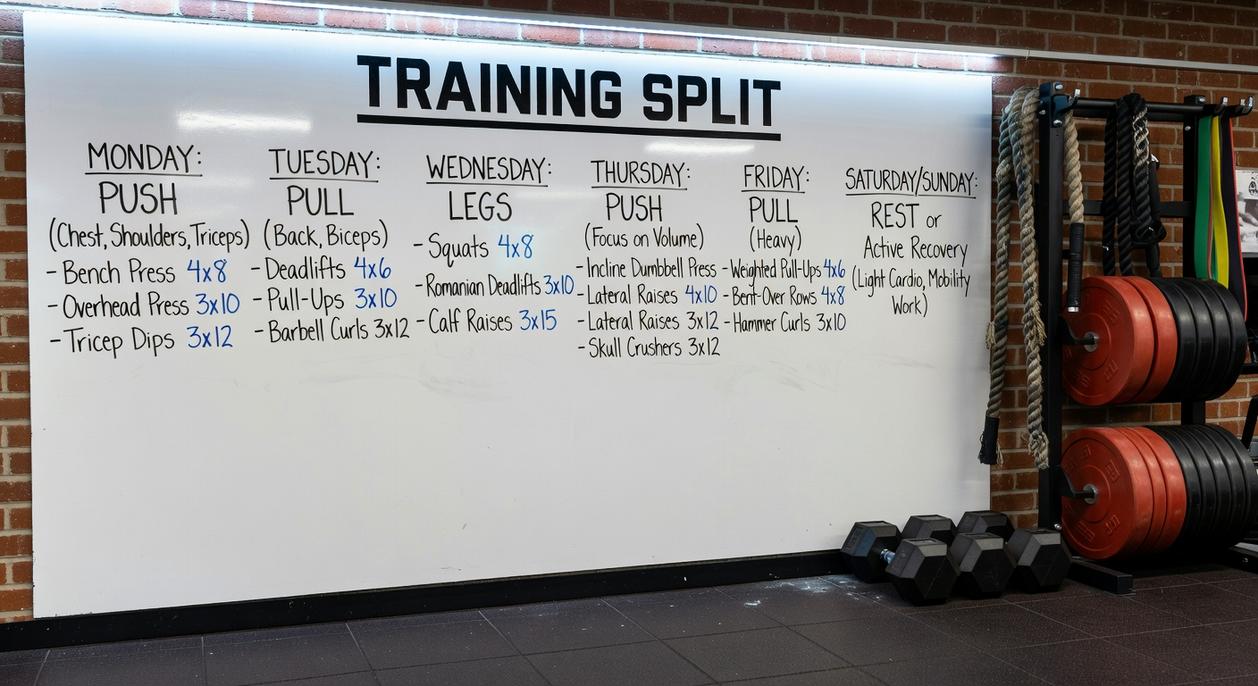
Finding the right rhythm in your training is a lot like finding the right song for a run: when it clicks, you feel it in your chest and stride. Below is a practical weekly workout split guide you can use to structure your days with purpose.
First, the 3-Day Split (Great for Beginners / General Fitness): Full Body Routine. For example: Mon – Full Body A, Weds – Full Body B, Fri – Full Body A. Because you train the entire body each session, muscles feel pleasantly worked yet not wrecked, ensuring frequency and ample recovery. Some argue full body plans limit growth. However, for new lifters, practicing movements more often builds coordination and confidence faster.
Next, the 4-Day Split (Ideal for Hypertrophy): The Upper/Lower Split. For example: Mon – Upper Body, Tues – Lower Body, Thurs – Upper Body, Fri – Lower Body. This allows more volume per muscle group, so you can chase that slow, satisfying burn in your quads or the tight pump across your back.
As a concrete example, here’s how the Upper/Lower week might look:
- Monday (Upper): Bench Press, Bent-Over Rows, Overhead Press
- Tuesday (Lower): Back Squats, Romanian Deadlifts, Walking Lunges
- Thursday (Upper): Pull-Ups, Incline Dumbbell Press, Lateral Raises
- Friday (Lower): Deadlifts, Leg Press, Hamstring Curls
Finally, the 5-Day Split (Advanced Strength/Hypertrophy): The “Body Part” Split. Example: Mon – Chest, Tues – Back, Weds – Legs, Thurs – Shoulders, Fri – Arms. The pump can feel skin-stretching and intense, but critics note recovery can suffer. They’re right—without sleep, nutrition, and smart load management, progress stalls. Choose the split that fits your schedule and lets you leave the gym tired, steady-breathing, and eager for the next session. Consistency turns effort into visible, lasting real change.
Putting It All Together and Staying Consistent
An unstructured routine is a recipe for failure. The real challenge isn’t the workout itself—it’s the absence of a clear, repeatable plan. Without structure, motivation fades, missed days pile up, and progress stalls (we’ve all had that “I’ll start Monday” moment).
Here’s the fix: build around consistency, progressive overload, and goal-specificity.
- Consistency means showing up on scheduled days, no negotiating.
- Progressive overload means gradually increasing weight, reps, or intensity over time.
- Goal-specificity means training in alignment with what you actually want—strength, fat loss, endurance, or muscle.
Some argue you should “just move more” and avoid rigid structure. Movement matters, yes—but structure creates measurable progress (and measurable progress keeps you motivated).
Choose one template from the weekly workout split guide that fits your schedule. Put it on your calendar for next week. Treat it like an appointment.
Don’t chase perfection. Chase completion of Week 1. That small win builds momentum—and momentum builds results.
Build Strength With a Smarter Weekly Plan
You came here looking for clarity on how to structure your training week—and now you have it. With a clear weekly workout split guide, you’re no longer guessing which muscle groups to train, when to rest, or how to balance intensity and recovery. That confusion and inconsistency that used to stall your progress? It doesn’t have to control your results anymore.
The real difference between spinning your wheels and building momentum is structure. When your workouts follow a purposeful split, your strength improves faster, recovery becomes intentional, and your energy stays consistent throughout the week.
Now it’s time to put this into action. Choose the split that matches your experience level, schedule your sessions for the week ahead, and commit to executing with focus. If you’re tired of inconsistent results and want a proven system that simplifies training and maximizes progress, start applying this plan today and stay consistent. Your stronger, leaner, more energized body is built one structured week at a time.