
If you’re looking to improve your energy, build strength, and create healthier daily habits that actually stick, you’re in the right place. This article is designed to cut through the noise of trendy wellness advice and focus on practical, science-backed strategies that support real, sustainable results. From foundational fitness routines and smart daily nutrition strategies to functional training principles and sleep optimization tips, we’ll break down what truly moves the needle for your health.
Many people struggle with inconsistency—starting strong but losing momentum due to overwhelming or conflicting information. Here, you’ll find clear, actionable guidance that aligns with your goal: building a balanced, high-performing lifestyle without burnout.
Our recommendations are grounded in current exercise science, evidence-based nutrition principles, and proven habit-formation research. Every strategy shared is designed to be realistic, adaptable, and effective—so you can confidently take the next step toward a stronger, healthier version of yourself.
Poor sleep is universal, yet many people still blame themselves for low energy, brain fog, and short tempers. Here’s the clarification: it’s not about how long you lie in bed, but how well your body cycles through deep and REM sleep. Quality, meaning restorative sleep stages, determines whether you wake restored or wrecked. So, instead of chasing hours alone, we’ll focus on practical, science-backed sleep optimization tips covering environment, routines, nutrition, and exercise. In words, consistent shifts—like darker rooms and steadier meal timing—can recalibrate your clock starting tonight. Think of it as training for true physical recovery, not rest.
Crafting the Perfect Sleep Sanctuary
The Power of Darkness
First, let’s talk about light. Even small amounts can suppress melatonin—the hormone that signals your body it’s time to sleep (Harvard Health). Some argue a little ambient glow is harmless or “cozy.” However, research shows blue light from phones and LEDs can delay sleep onset and reduce REM cycles (Sleep Foundation). So, use blackout curtains, wear a sleep mask, and cover electronic LEDs. Think cave, not café.
Mastering Temperature
Next, consider temperature. Your body naturally lowers its core temperature—its internal heat level—before sleep. A cool room between 60–67°F (15–19°C) supports this process (National Sleep Foundation). Sure, some people prefer a warm, blanket-heavy setup. But overheating can trigger micro-awakenings (those brief disruptions you barely remember). Pro tip: try breathable sheets before cranking the AC.
Silence the Noise
Meanwhile, noise pollution fragments sleep cycles, even if you don’t fully wake up. While some claim they “sleep fine” with the TV on, studies show inconsistent sound spikes raise stress hormones. Earplugs, white noise machines, or sealing window gaps can help.
Your Bed Is for Sleep Only
Finally, build a strong mental association between bed and rest. If you work or stream shows there, your brain links it with alertness (hello, late-night scrolling). Follow basic sleep optimization tips: reserve your bed strictly for sleep.
Your 24-Hour Cycle: Winning the Day to Win the Night
Ever notice how one late night can wreck your entire week? You promise you’ll “catch up on sleep” Saturday, then Sunday night hits and you’re wide awake at 1 a.m. (classic). The truth is, your body craves rhythm.
The Non-Negotiable Sleep Schedule
Your circadian rhythm—your internal 24-hour clock—runs on consistency. When you wake up and go to bed at the same time every day (yes, even weekends), you anchor that clock. According to the National Sleep Foundation, consistent schedules improve sleep quality and daytime alertness. Sleeping in to recover often backfires. It shifts your rhythm and makes Monday miserable.
Harness Morning Sunlight
Within 10–15 minutes of waking, get direct sunlight. This light exposure tells your brain to suppress melatonin (the hormone that makes you sleepy) and start the day. Later, melatonin will rise naturally at night. Skip this step and your brain stays groggy—like it never got the memo that morning started.
Implement a ‘Wind-Down’ Ritual
You can’t slam the brakes from 100 to zero. Try screen-free habits for one hour before bed: reading a physical book, gentle stretching, meditation, or journaling. Think of it as a landing sequence, not a crash. (Your brain isn’t a laptop; you can’t just close the lid.)
The Blue Light Blockade
Blue light from devices mimics daylight and delays melatonin release (Harvard Medical School). Adopt a strict 60–90 minute no-screens rule or wear blue-light-blocking glasses. If that feels impossible, start with small digital detox strategies to reduce stress.
These simple sleep optimization tips can transform your nights—if you stop sabotaging your days.
Nutrition and Hydration: The Sleep-Smart Eating Plan
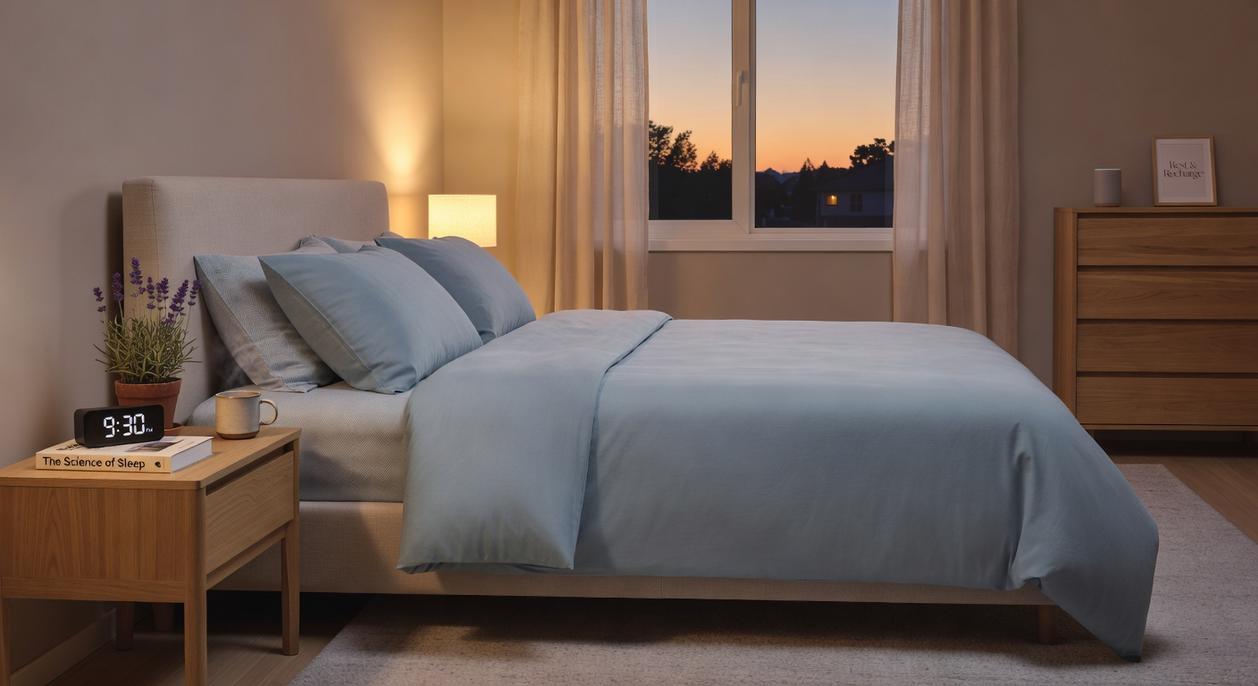
What you eat before bed isn’t just about calories—it’s about sleep architecture (the structured stages your brain cycles through at night).
Timing Your Last Meal: Early vs. Late
- Dinner 2–3 hours before bed: Supports digestion and reduces acid reflux (a backward flow of stomach acid that can wake you).
- Dinner right before bed: Higher chance of discomfort, restlessness, and fragmented sleep.
Some argue late meals don’t matter if total calories are controlled. Fair—but lying down with a full stomach is like starting a dishwasher cycle and then shaking the machine.
The Truth About Caffeine and Alcohol: Alert vs. Asleep-ish
- Caffeine (8+ hours before bed): Has a long half-life (the time it takes for half the substance to leave your system), meaning your 4 p.m. coffee may still be active at midnight (National Sleep Foundation).
- Alcohol at night: Acts as a sedative initially but disrupts the second half of sleep, reducing REM (critical for memory and mood) (Sleep Foundation).
Sleep-Promoting Nutrients: Smart vs. Random Snacking
- Magnesium: almonds, spinach
- Tryptophan: turkey, seeds
- Natural melatonin: tart cherries, walnuts
Strategic Hydration
Drink steadily during the day, taper 1–2 hours before bed. Hydrated vs. 3 a.m. bathroom trip—your choice.
These small swaps double as sleep optimization tips that compound nightly.
Functional Fitness for Deeper Sleep
Back in 2022, researchers tracking adults over a 12‑week training block found something striking: consistent exercise increased slow-wave sleep—the deepest stage linked to muscle repair, immune support, and memory consolidation (National Sleep Foundation). In simple terms, slow-wave sleep is your body’s overnight recovery mode.
Regular functional training—squats, carries, pushes—signals your system to rebuild stronger. After three months of steady movement, many people report falling asleep faster and waking less often. Still, critics argue evening workouts boost energy too much. They’re not wrong. Intense, high-heart-rate sessions spike cortisol and adrenaline, which can delay melatonin release for some.
That’s why timing matters:
- Morning or afternoon sessions enhance nighttime depth.
- Avoid late-night HIIT if you’re sensitive to stimulation.
- Gentle evening movement like yoga or tai chi calms the nervous system.
Light stretching before bed (think “less Rocky montage, more spa mode”) releases tension and supports sleep optimization tips that actually stick.
High-quality sleep isn’t a luxury—it’s your foundation. If you’re spending eight hours in bed yet waking up exhausted, that’s not laziness; that’s a broken system (and no, your pillow isn’t plotting against you). The good news? Small, consistent daily actions rebuild real energy.
You’re not stuck. You’re not “just bad at sleeping.” With the right sleep optimization tips, you regain control—one habit at a time.
Tonight, don’t overhaul your life. Pick one or two strategies from this guide and try them. Seriously. Start small, win early, and let momentum carry you from surviving to thriving. Your future self will cheer.
Take Control of Your Energy, Strength, and Results
You came here looking for practical ways to improve your health, boost performance, and build a routine that actually fits your life. Now you have the foundational fitness strategies, daily nutrition adjustments, functional training methods, and sleep optimization tips to make it happen.
The real pain point isn’t lack of motivation — it’s confusion, inconsistency, and not knowing what truly works. When your workouts feel random, your nutrition feels overwhelming, and your energy crashes daily, progress stalls. That stops today.
Start small. Lock in one foundational workout. Clean up one daily meal. Apply the sleep optimization tips tonight. Stack these wins consistently.
If you’re ready to stop guessing and start seeing real, sustainable results, follow our proven wellness strategies trusted by thousands who’ve transformed their routines. Take action now — commit to the plan, apply what you’ve learned, and build the healthier, stronger life you deserve.