
I need to tell you something that might sound too simple to matter.
You’re probably dehydrated right now. And it’s costing you more than you think.
Most people walk around in a constant state of mild dehydration. They blame their afternoon crash on lack of sleep. They think their brain fog is just stress. They wonder why their workouts feel harder than they should.
The real culprit? Water. Or the lack of it.
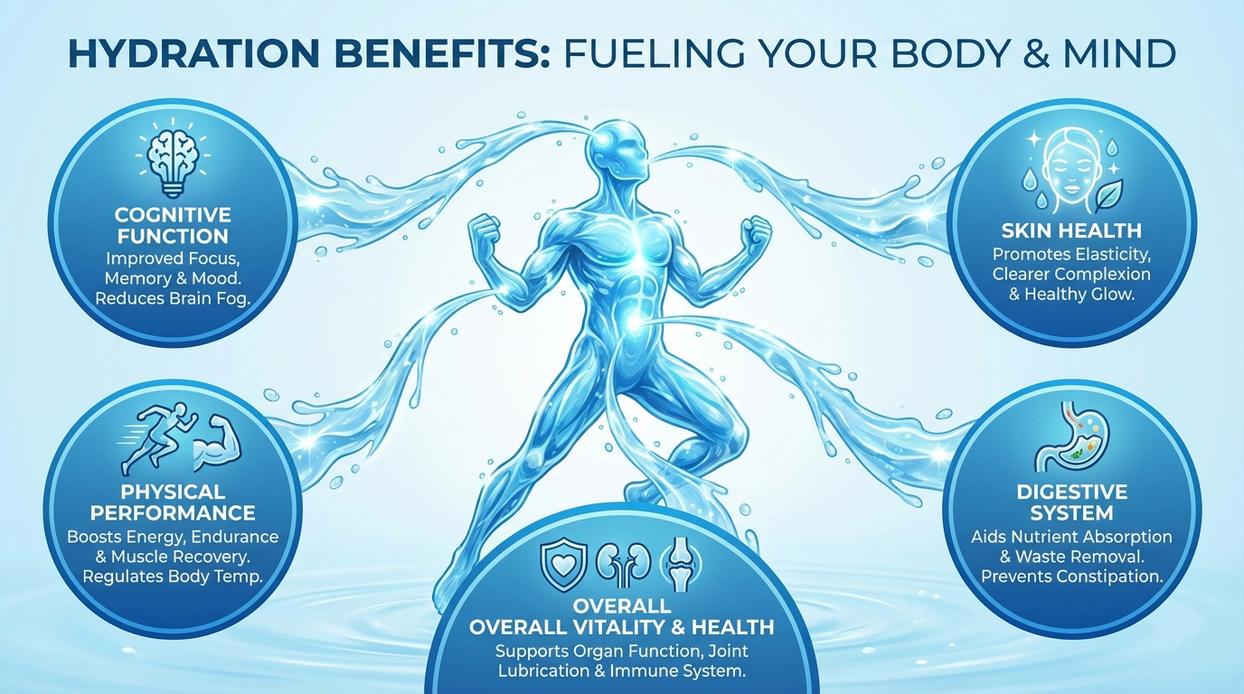
Here’s what proper hydration actually does: sharper mental clarity, better physical performance, improved metabolic function, and sustained energy throughout the day. Not in some abstract way. In a way you’ll feel within hours.
I’ve spent years studying nutritional science and functional wellness. The research is clear. Hydration isn’t just about drinking when you’re thirsty. It’s about maintaining a baseline that lets your body actually work the way it’s supposed to.
This isn’t another article telling you to drink eight glasses of water. That advice is useless because it ignores how your body actually uses water.
You’ll learn how to recognize when you’re dehydrated (it’s not what you think), how much water you actually need (it varies more than you’d expect), and how to build hydration into your day without thinking about it.
No complicated protocols. Just practical strategies that work with your life, not against it.
Beyond Thirst: What Water Actually Does in Your Body
You’ve heard it a million times. Drink more water.
But WHY though?
Most people think water just keeps you from feeling thirsty. Maybe helps with dry skin or headaches.
That’s barely scratching the surface.
Your cells literally can’t function without water. Every single chemical reaction happening in your body right now? Water makes it possible. It’s the solvent that dissolves nutrients, minerals, and compounds so your cells can actually use them.
Think of it like this. Your body runs thousands of processes every second. Water is what allows those processes to happen.
Some folks say you don’t need to worry about hydration that much. They’ll tell you just drink when you’re thirsty and you’ll be fine.
Here’s the problem with that thinking.
By the time you feel thirsty, you’re already behind. Your body is signaling that things are getting tight. And for anyone training hard or working in heat, waiting for thirst is a recipe for poor performance (or worse).
Water also acts like your body’s delivery system. It carries oxygen and nutrients to your cells through your bloodstream. Then it hauls waste products away so they don’t build up and cause problems. Without enough water, this whole system slows down.
And here’s something most people don’t think about.
Your body uses water to regulate temperature. When you sweat during a workout, that’s water leaving your body to cool you down. When you breathe, you’re releasing water vapor. This is how you maintain a stable core temperature even when you’re pushing hard.
The benefits of hydration fntkhealthy covers go way beyond just avoiding dehydration. We’re talking about keeping your entire system running the way it should.
The Top 5 Benefits of Optimal Hydration
You probably know you should drink more water.
But do you know why it actually matters?
I’m not talking about the generic “stay hydrated” advice you see everywhere. I mean the real, measurable ways water affects your body every single day.
Most people think hydration is just about not feeling thirsty. That’s barely scratching the surface.
Let me walk you through what’s really happening when you drink enough water.
Your Physical Performance Takes a Hit Without It
Here’s something that surprised me when I first learned it. Losing just 1 to 2% of your body weight in water can mess with your strength and endurance (that’s only about 2 to 3 pounds for most people).
Your muscles need water to contract properly. When you’re even slightly dehydrated, your power output drops. Your endurance suffers too.
If you’re following any kind of training program, this matters more than you think.
Your Brain Runs on Water
Dehydration thickens your blood. Thicker blood means less oxygen gets to your brain.
The result? Your focus tanks. Your memory gets fuzzy. Even your mood takes a nosedive.
I’ve noticed this myself on days when I skip my usual water intake. Everything just feels harder.
Your Kidneys Need Water to Do Their Job
Your kidneys filter waste from your blood all day long. But they can’t do it without enough water.
When you’re dehydrated, waste builds up. You’re also at higher risk for kidney stones, which I’ve heard are about as fun as they sound (not at all).
Water helps flush everything out. Simple as that.
Your Skin Shows It
Water keeps your skin plump and elastic. It won’t erase wrinkles, but it does help reduce the appearance of fine lines.
Think of it like this. A well-watered plant looks full and healthy. A dry one looks wilted. Your skin works the same way.
Your Digestion Depends on It
Water breaks down food so your body can absorb nutrients. It also keeps things moving through your digestive tract.
Without enough water, you end up constipated. Not exactly comfortable.
The benefits of hydration fntkhealthy go way beyond just quenching your thirst. Your whole system runs better when you’re properly hydrated.
Start paying attention to how much you’re actually drinking. You might be surprised at how much better you feel when you get it right.
Are You Dehydrated? The Subtle Signs to Watch For
Most people think dehydration means you’re dying of thirst in the desert.
That’s not how it works.
Your body sends you signals way before you feel parched. The problem? We ignore them or mistake them for something else entirely.
I’m going to walk you through the signs you’re probably missing right now.
The Symptoms You’re Overlooking
You know that afternoon slump where you can barely keep your eyes open? That might not be your boring job or lack of sleep.
It could be dehydration.
Persistent fatigue is one of the first things I see when someone isn’t drinking enough water. Your body needs fluid to transport oxygen and nutrients to your cells. When you’re running low, everything slows down.
Then there are the headaches. Not the migraine kind. Just that dull, nagging pressure that sits behind your eyes and won’t quit.
Brain fog is another big one. You sit down to work and can’t focus for more than five minutes. Your thoughts feel sluggish. Words don’t come as easily.
And irritability? Yeah, that too. When you’re dehydrated, your mood takes a hit faster than you’d think.
The One Check You Should Do Daily
Here’s the easiest way to know if you’re drinking enough.
Check your urine color.
Pale yellow or clear? You’re good. Dark yellow or amber? You need to drink more water. It’s that simple.
(I know it sounds basic, but most people never actually look.)
When Your Body Lies to You
Your body can confuse thirst signals with hunger signals. It happens more than you’d expect.
You feel hungry an hour after eating. You grab a snack. But what you really needed was a glass of water.
Next time you feel those random hunger pangs, drink water first. Wait ten minutes. See if the feeling goes away.
This is part of the benefits of hydration fntkhealthy that most people don’t talk about. Proper hydration helps you understand what your body actually needs.
My recommendation? Start tracking your water intake for one week. You’ll probably realize you’re drinking way less than you thought. And once you fix that, those weird symptoms you’ve been dealing with might just disappear.
For more practical tips like this, check out our health advice fntkhealthy section.
How Much Water Do You Really Need? (It’s Not Just 8 Glasses)
You’ve heard it a million times.
Eight glasses of water a day keeps the doctor away. Or something like that.
Here’s my take: that rule is garbage.
Not because hydration doesn’t matter. It does. But because your body isn’t the same as mine, and treating everyone like they need the exact same amount of water is lazy advice.
The eight glass thing? It came from a 1945 recommendation that got twisted over time. The original guidance included water from food too, but somehow that part got lost (classic game of telephone).
Your actual water needs depend on a bunch of things. Your weight matters. So does how much you move. If you’re doing which superfoods are popular in 2024 fntkhealthy level nutrition planning, you’re probably already thinking about this stuff.
Someone who weighs 120 pounds and sits at a desk all day needs way less than someone who weighs 200 pounds and trains five days a week. Living in Phoenix? You’ll need more than someone in Seattle.
I use a simple starting point: aim for half your body weight in ounces. Weigh 160 pounds? Start with 80 ounces of water daily.
Then adjust based on what your body tells you. Thirsty? Drink more. Urine looking dark yellow? You need more water. Clear or pale yellow? You’re good.
The benefits of hydration fntkhealthy go beyond just not feeling thirsty. Better energy, clearer thinking, and yeah, your workouts actually improve when you’re properly hydrated.
But don’t overthink it. Your body has a built-in hydration alarm. It’s called thirst.
5 Healthy Living Hacks to Drink More Water Effortlessly
You know you should drink more water.
Your doctor says it. Your fitness tracker nags you about it. That one friend who carries a gallon jug everywhere won’t shut up about it.
But here’s the reality. Plain water is boring. And remembering to drink it feels like another chore on your already too long list.
I’m not going to lecture you about the benefits of hydration fntkhealthy. You already know water is good for you.
What you need are actual ways to drink more without feeling like you’re forcing it down.
So here are five hacks that actually work.
Eat your water. Sounds weird but stick with me. Cucumber is 96% water. Watermelon clocks in at 92%. Celery is basically crunchy water with an attitude. If drinking feels like work, just eat these instead. (Plus you get to tell people you’re on a special hydration diet.)
Make it taste like something. Toss in some lemon slices. Add mint leaves. Throw in a few berries and pretend you’re at a spa. Water doesn’t have to taste like nothing.
Stack it with what you already do. Brush your teeth? Drink a full glass right after. Make coffee? Down a glass first. The trick is attaching water to habits you never skip anyway.
Follow the one to one rule. For every cup of coffee or glass of wine, drink one glass of water. Your body will thank you. Your headache the next morning will be way less angry.
Get a bottle with time markers. Those lines telling you where you should be by 10am or 2pm? They work. It’s like having a tiny coach on your desk without the whistle.
That’s it. Pick one or try all five.
Make Hydration Your Health Cornerstone
You now understand that proper hydration drives your energy, sharpens your focus, and supports your overall well-being.
It’s easy to forget about water. The consequences sneak up on you slowly.
Brain fog. Low energy. Poor recovery. These are signs you’re running dry.
The good news? You don’t need to overhaul your entire life. Understanding your personal needs and using simple daily hacks can turn hydration from a chore into an automatic habit.
I’ve shown you the strategies that work. Pick one and start today.
Track your intake for a week. Set reminders on your phone. Add electrolytes to your morning routine. Whatever feels easiest.
You’ll feel the difference fast. Better focus during work. More energy during workouts. Clearer thinking throughout the day.
Hydration at fntkhealthy means building a foundation that supports everything else you do for your health.
Your body is already asking for this. Now you know how to answer.
Start with one strategy today and build from there.